
Prof. Jana Asselman is an Associate Professor at Ghent University and Director of the Blue Growth Research Lab. Her research explores the relationships between environmental health, marine ecosystems and human health.
She combines expertise in ecotoxicology, molecular biology and marine biotechnology to understand environmental challenges and develop sustainable solutions. Her work focuses on micro- and nanoplastics, environmental genomics, marine bioactive compounds and innovative applications of marine resources. Throughout her academic career, she has developed an internationally recognised research programme spanning environmental toxicology and blue biotechnology. She has authored more than 100 peer-reviewed scientific publications.
Leadership and International Collaboration
Prof. Asselman is Chair of Marine@UGent. She also contributes to diverse international research initiatives and networks, including EMBRC, EUREMAP and the European Partnership for the Assessment of Risks from Chemicals (PARC). Her leadership focuses on connecting scientific expertise, research infrastructures and international partnerships. Through these collaborations, she helps advance marine science, environmental health and sustainable blue innovation.
She participates works with universities, research institutions, industry and public authorities worldwide. These partnerships strengthen interdisciplinary research and help translate scientific discoveries into societal impact.
Education and Supervision
Prof. Asselman is committed to educating and mentoring the next generation of scientists. She teaches marine and environmental sciences at Ghent University and supervises PhD researchers, postdoctoral fellows and Master’s students. Her approach to supervision combines scientific excellence with critical thinking, interdisciplinary collaboration and personal development. She also encourages researchers to connect their scientific work with broader environmental and societal challenges.
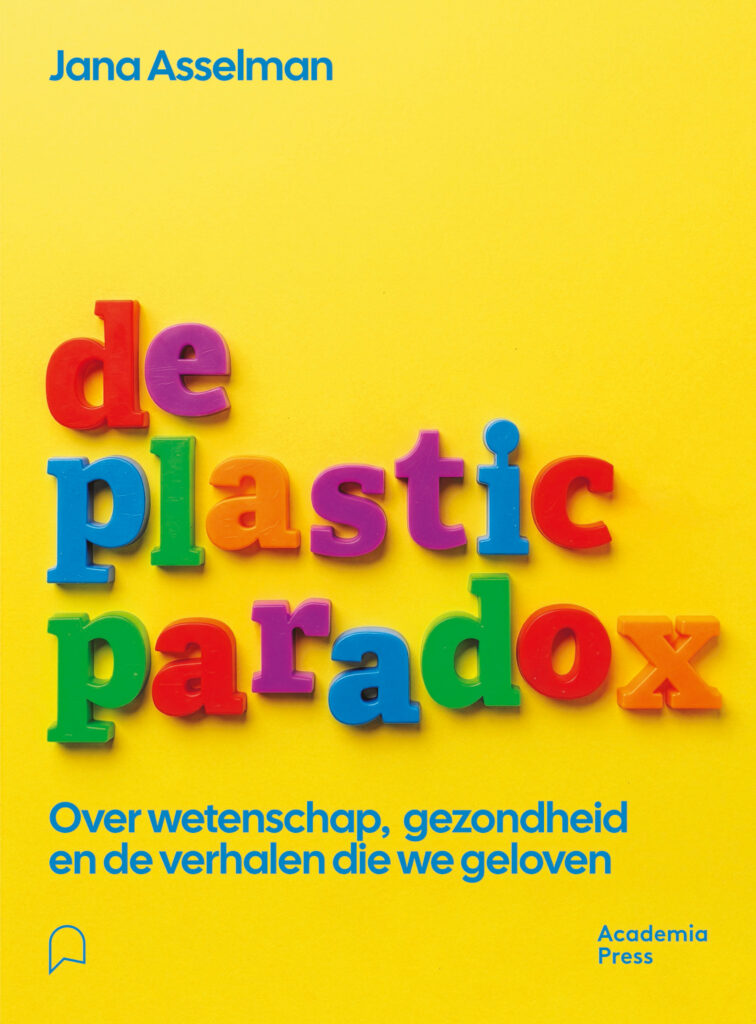
The Plastic Paradox
Prof. Jana Asselman is the author of The Plastic Paradox, a non-fiction book for a general audience that combines scientific insights with storytelling.
Few materials have shaped modern society as profoundly as plastic. It has enabled remarkable innovation and progress. Yet plastic also presents major environmental and sustainability challenges. How can one material be both part of the problem and part of the solution?
The Plastic Paradox explores this question without portraying plastic as either a miracle material or a global villain.
The book traces the history of plastics and explains the chemistry behind polymers. It also examines their role in modern society, from healthcare and industry to microplastic pollution and human health. Recycling, circular economy strategies and emerging bio-based alternatives are explored alongside scientific evidence and policy developments.
Nine short fictional stories are interwoven throughout the scientific chapters. In these stories, plastic appears quietly in the background, much as it does in everyday life. Together, they invite readers to reflect on the connections between materials, people, innovation and responsibility.
Above all, The Plastic Paradox is a book about nuance. It encourages readers to look beyond headlines and assumptions and to understand the complex choices surrounding plastics.
The Plastic Paradox was published by Lannoo in September 2026.